• Home
  • Nature Photography
  • Wildlife Videos
  • Guide Stories
  • Conservation News
  • About
Bears & Beyond
Bears 2

Bear Photography Journal- Capturing Dawn

By Brad Josephs · On September 23, 2020


I have been going over some recent bear images, and figured I would pick a few and explain the techniques I used to get shoot them. One major secret to photography is always the gear you use. My “kit” consists of a Sony A9, 100-400 GM lens, 200-600 G lens, and a 16-35 2.8- all Sony. The top mirrorless cameras offer, in short, twice the camera in half the package from traditional DLSRs. Autofocus speed, ISO performance, frame rates and amazing dynamic range are a few of the benefits offered by this new technology. Here a few favorites, and what comes to my mind.

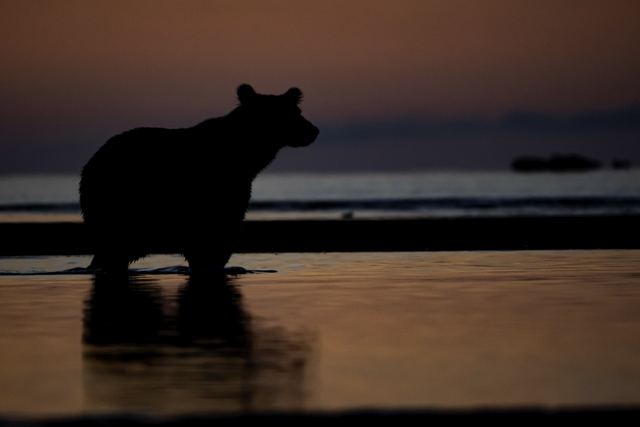
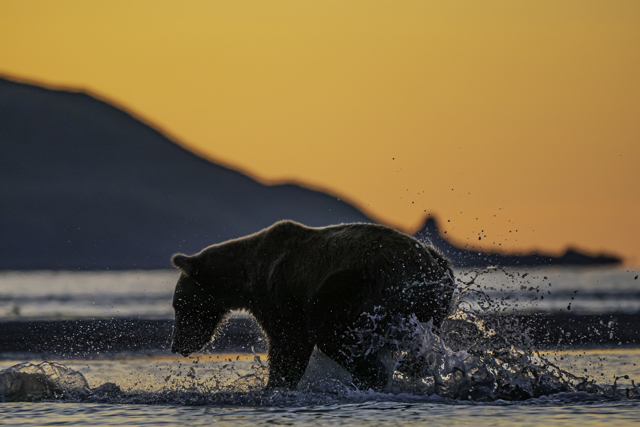
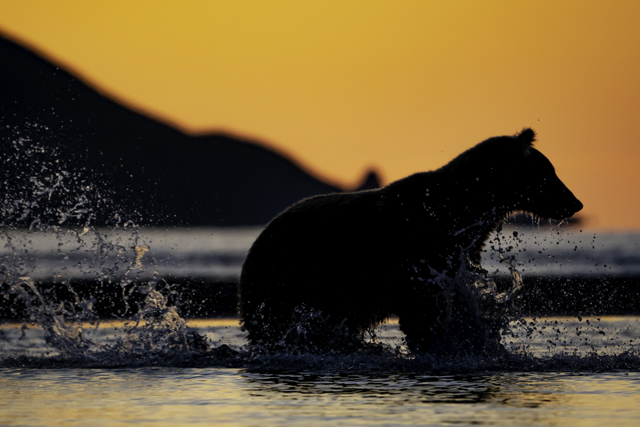
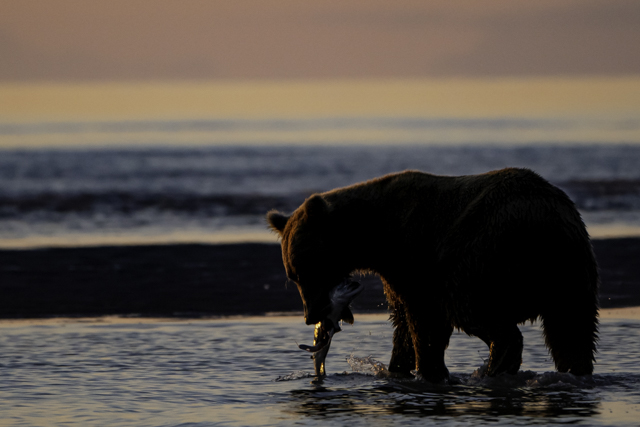
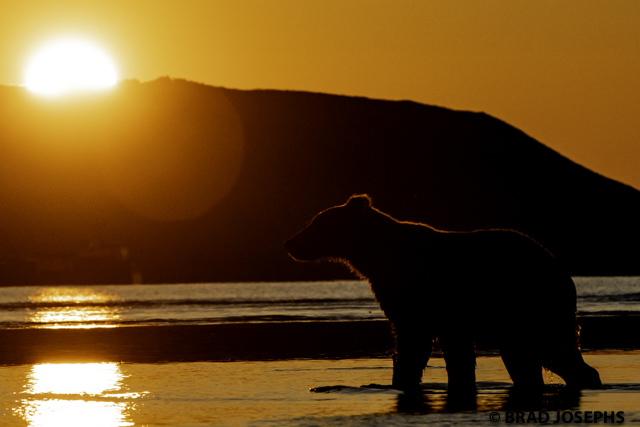
I recently had the opportunity to use this gear during a spectacular sunrise on the coast of Katmai National Park. The skies were clear, the tide low, and salmon running- a fantasy come true. By positioning ourselves facing the rising sun I was able to capture the bears in silhouettes. To expose for the bright sky, the shadowed bears appear only as black shapes. If I was to expose for the bears in shadow, the sky would be totally over-exposed, or “washed out.” The main technique to achieve these shots is to not expose for the bear, but the bright sky behind, or underexpose the image, depending on the percentage of dark/light in the frame. If the bear and other dark content is very small compared to the bright sky, the exposure, if set to evaluative metering, should take care of itself. If, like in the below image, the dark bear and sandbar makes up a good portion of the frame, you could set your exposure compensation to -2/3 or -1.
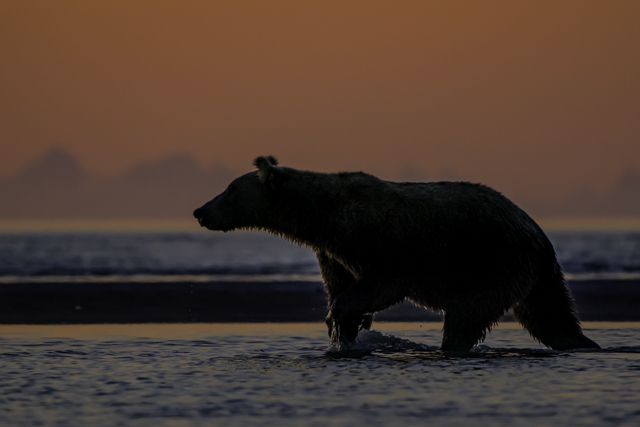
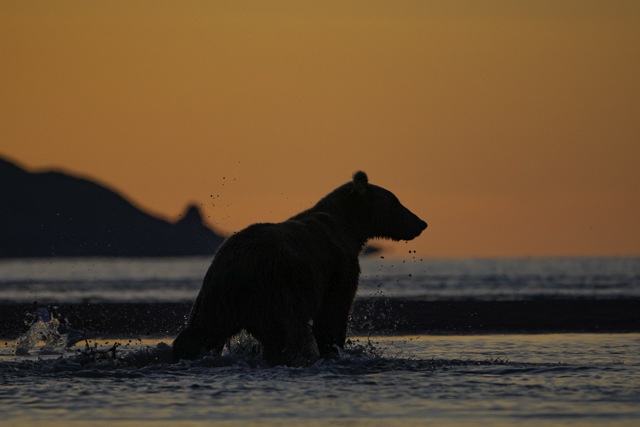
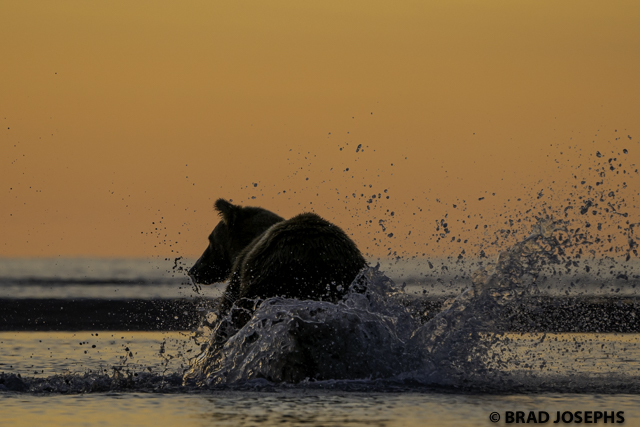
Long before the sun rises, one can still get some great sky color. This bear periodically ran for fish, so I used high ISO to make sure my shutter speed was fast. ISO 1000, f 5.6, 2000th/sec, 400mm. Notice I did get some light along the edges of the bear- this was done by lightening the shadows, but darkening the blacks.

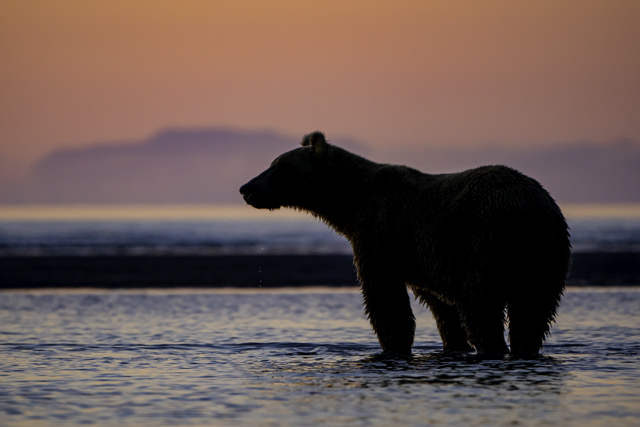
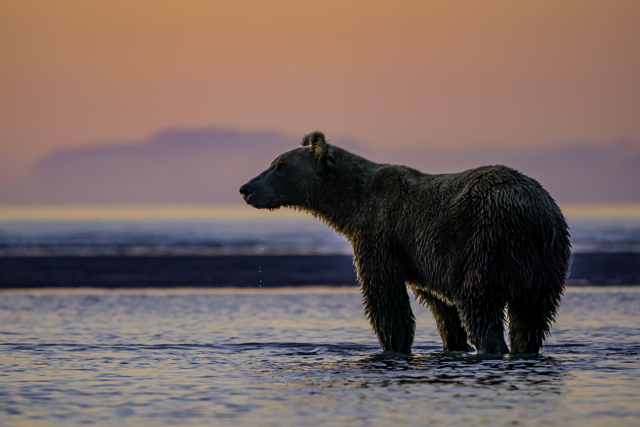
This image is identical to the one below, but in the one below I brightened the shadows, but kept the black dark in Lightroom. Dynamic range is the measurement between the whitest whites and the blackest blacks in an image, or the lowest and highest values of density and luminance. The higher the “dynamic range” of your camera, the more room you have to bring up shadows in post processing. Newer high end cameras, such as my Sony A9 have huge dynamic range capabilities.

Which one do you prefer?

Here is another example of bringing out some of the detail in the bear by lightening shadows in lightroom, and taking advantage of my camera’s high dynamic range.

1000 ISO, f 5.6, 400mm, 1/2000th sec

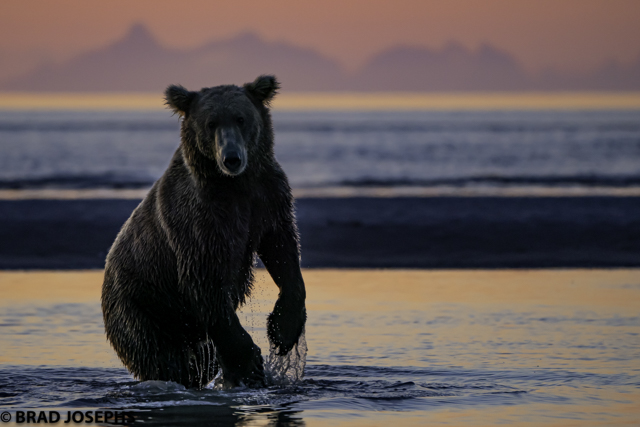
As the sun began to rise, I began to get some “rim light” along the edges of the bear facing the sunrise.

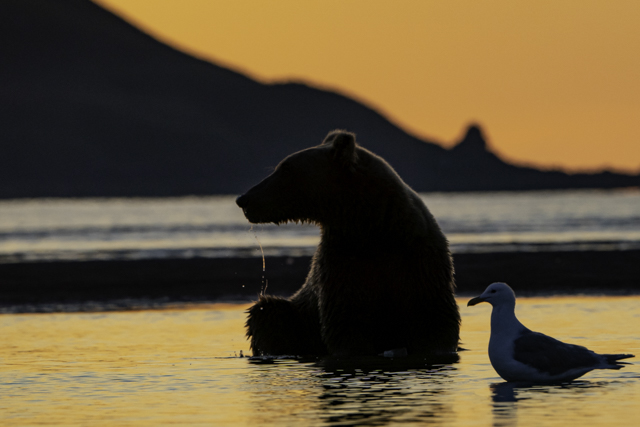
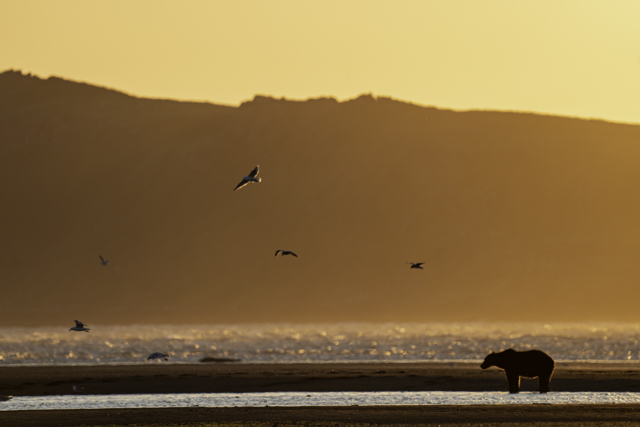
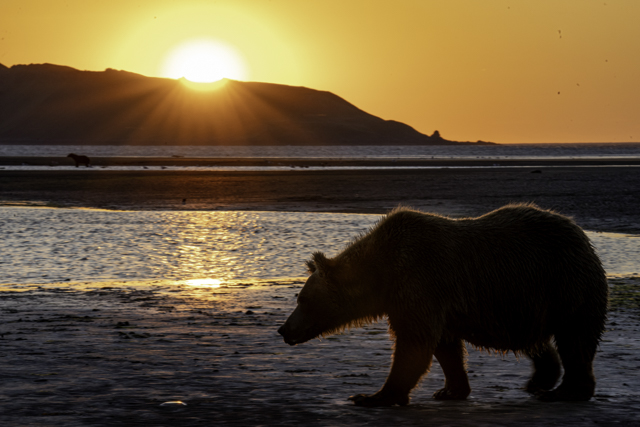
Bear waiting for fish, after the sun has risen. ISO 100, 1/400th sec, f 6.3, 600 mm As the light quickly increased, I dropped my ISO to improve image quality. My slower shutter speed of 1/400th was ample since the bear was no longer actively fishing.

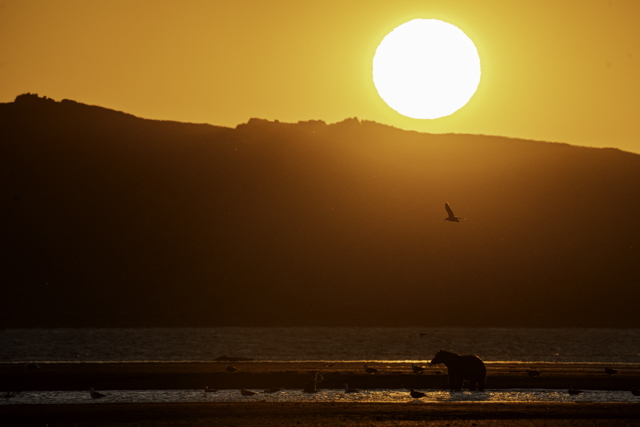
Sun rising above the offshore island.

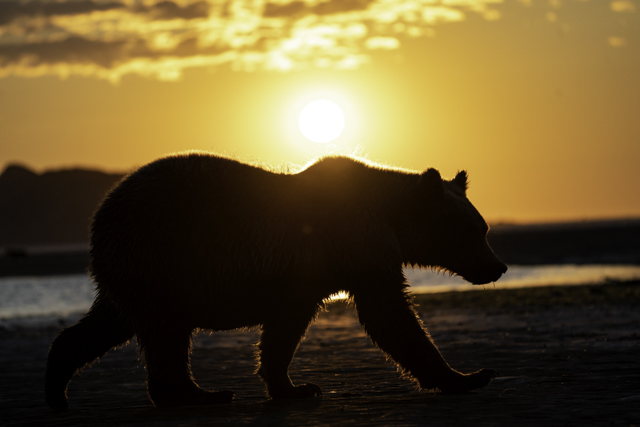
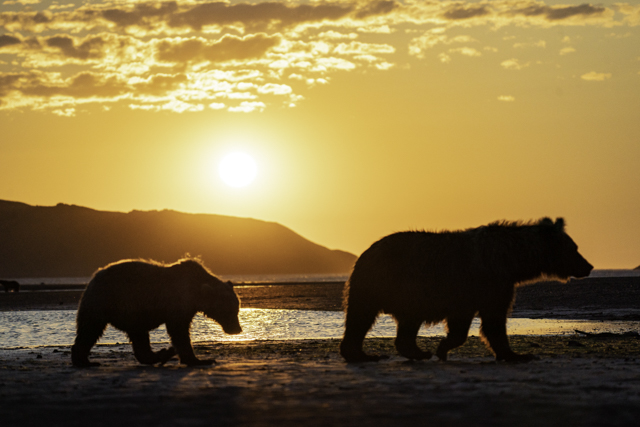
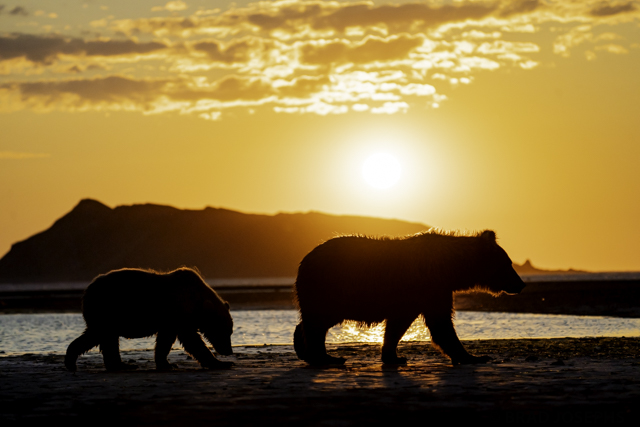
I was lucky to have a bear walk by closely before the sun had risen too much.

Sadly my focus switched to the river and off the bears for a split second. This happens sometimes when you are trying to focus on something very dark.

This was better….

I quickly tried to set my aperture to the highest value, f32 to get a little starburst in the sun, but there is motion blur because when the aperture went that high, it dropped the shutter speed to 1/50th of a second, so i messed that one up.

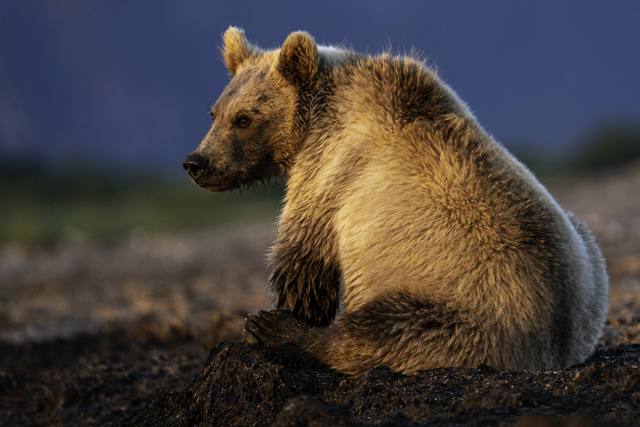
Being so focused on getting the backlight stuff, I almost forgot to look behind me and this 3rd summer cub with golden front-light!

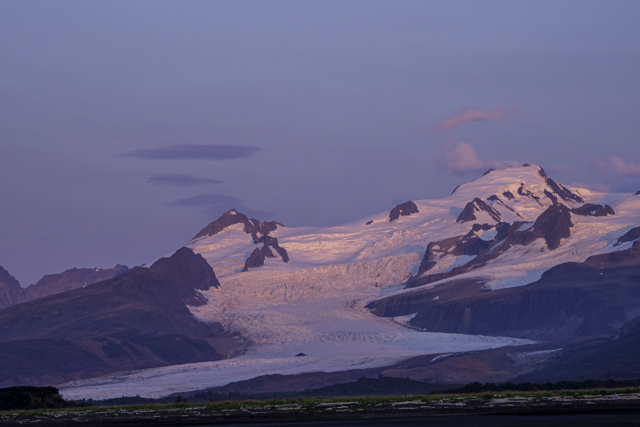
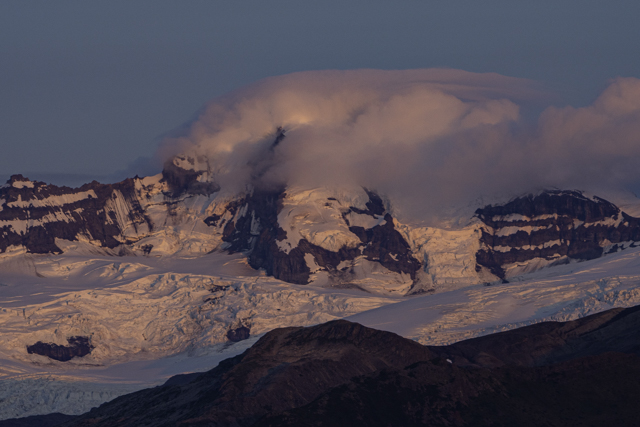
Alpenglow on the glaciers isn’t too bad either!

Thanks for letting me share some information and images from a beautiful sunrise in the Alaskan wilderness. We are very lucky to still have a few wild places and healthy populations of charismatic animals such as bears. The Alaska Peninsula is under direct threat of becoming heavily industrialized by the proposed Pebble Mine. Go to Alaskabears.earth to learn more about this frightening scenario and how you can help stop it. Time is running out!!!

Keep Exploring and Supporting Conservation! Or do both by joining us on an amazing bear expedition in 2021!

Brad Josephs


Alaska ConservationAlaska Photo ToursAlaska Travelalaska wildlife tripsBearsGrizzly BearsKatmai National Park
Share Tweet

Brad Josephs

Brad has been a Natural Habitat Expedition Leader since 2005, guiding Alaska grizzly bear tours, Churchill polar bear tours, northern lights expeditions and China panda tours. His specialty is bear biology and ecology of the north country.

You Might Also Like

  • Bears

    Bears and Swans- Alaska Photography 2022

  • Bears

    Coastal Grizzly Mating Season Highlights 2022- Lake Clark, Alaska

  • Bears

    September Katmai Bears Highlights Part 2- Fishing Action

2 Comments

  • Liza Comeau says: September 27, 2020 at 4:55 pm

    Not being a photographer to me they all are fabulous.

    Reply
    • Brad Josephs says: October 6, 2020 at 7:34 am

      Thanks Liza!

      Reply

    Leave a reply Cancel reply


    Follow Brad on Social Media!

    Don’t miss any of Brad’s adventures and wildlife sightings! You can follow him on YouTube, Facebook and more!

    Tags

    Alaska Alaska Conservation Alaska Photo Tours Alaska Travel Bears Bear Viewing borneo Brad Josephs Brown Bears Churchill Katmai National Park Natural Habitat Adventures Photography Wildlife Watching Trips

    Archives

    • Home
    • Nature Photography
    • Wildlife Videos
    • Guide Stories
    • Conservation
    • About

    Copyright © 2026 Alaska Bears and Wolves