• Home
  • Nature Photography
  • Wildlife Videos
  • Guide Stories
  • Conservation News
  • About
Bears & Beyond
Ozark Journal 0

Ozark Journal- Photographing Birds In A Snow Storm

By Brad Josephs · On January 27, 2022


Its been a nice winter at my house far back in the woods in the Ozarks of north-central Arkansas. Though very mild until the new Year, we have had some good stretches of cold weather since then. A few weeks ago a very strong cold front collided with a strong flow of gulf moisture, creating a beautiful snow storm. I spent the day keeping the wood-stove loaded, making venison stew, and photographing birds that I was providing sunflower seeds on the edge of the frog pond next to the house. Here are my favorites from that memorable day. I once again was very impressed with my Sony A9 and Sony 200-600 lens.
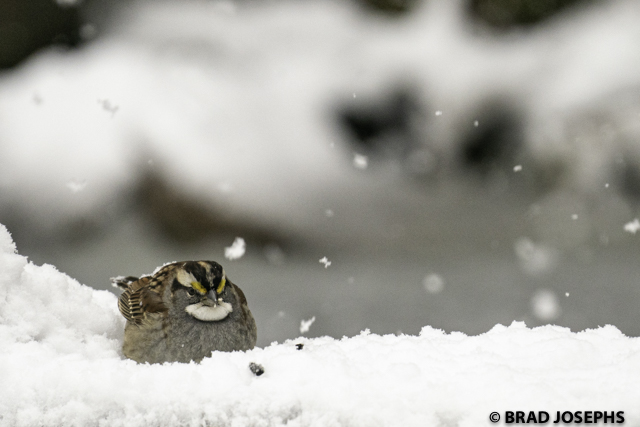
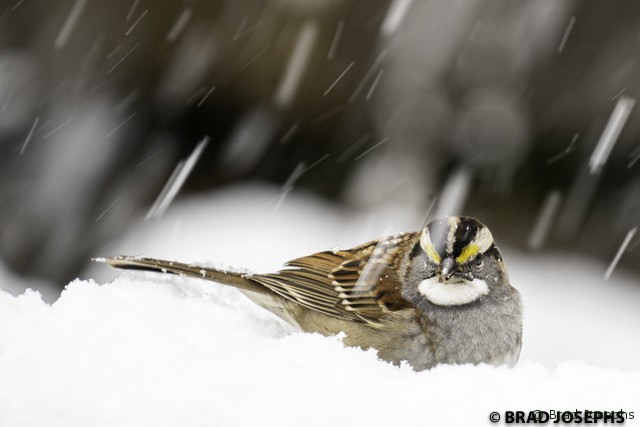
A beautiful white throated sparrow takes a break as the snow flakes fall.

This was a fantastic way for me to capture these normally difficult to photograph birds. The edge of the frog pond is about 3 feet high, as we built it by stacking local rocks, so in a sitting position, I was at eye level with the birds, which are normally in the trees or on the ground for a few species like the dark-eyed juncos and sparrows. The far side of the pond is a limestone cliff, which provided a dark, clean background which allowed the falling snowflakes to really pop. In some of the images you can see that I slowed the shutter speed down to around 1/80th of a second to motion blur the snowflakes- but only worked if the birds were sitting still so they remained sharp.
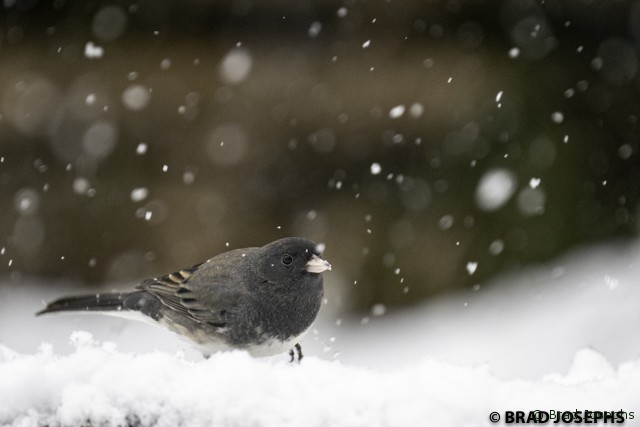
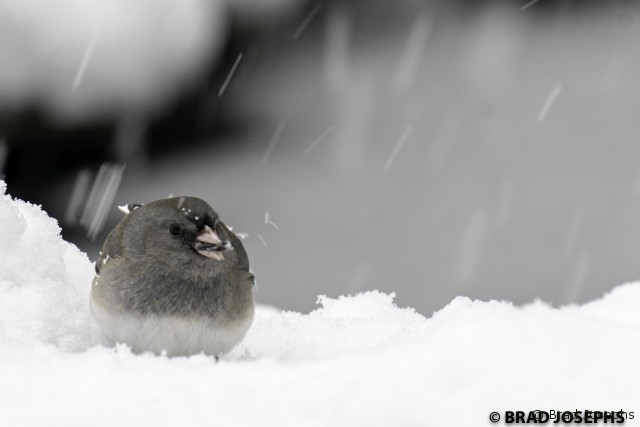
Dark-eyed junco.

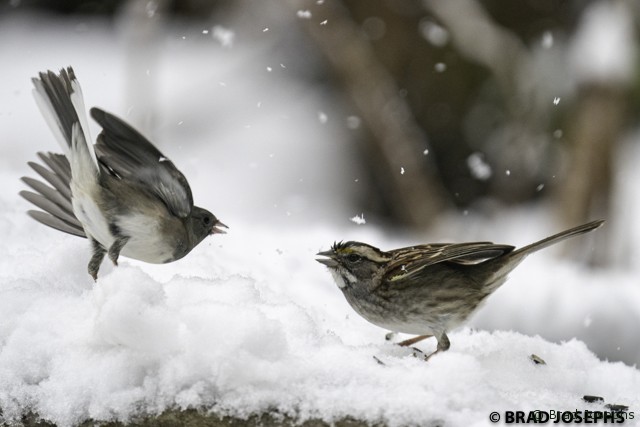
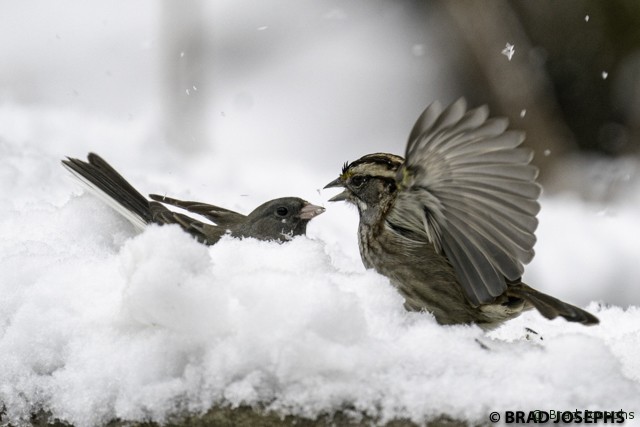
Junco vs White throated sparrow

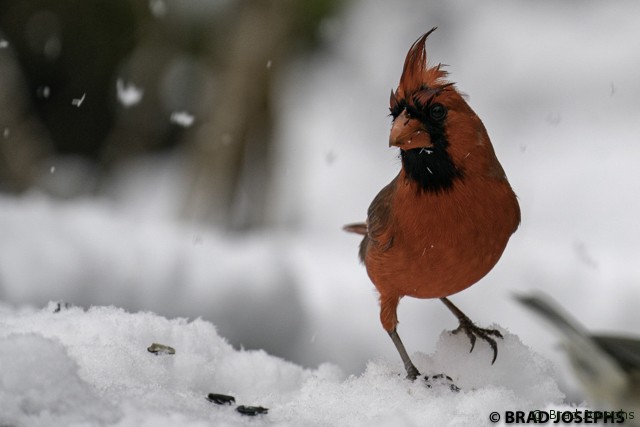
One of my favorites, of a stunning male cardinal.

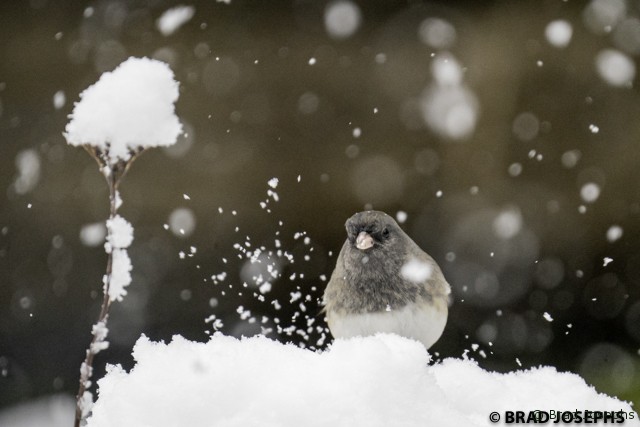
Huge Snowflakes, dark background, dark-eyed junco.

White throated sparrow with motion blurred snowflakes.

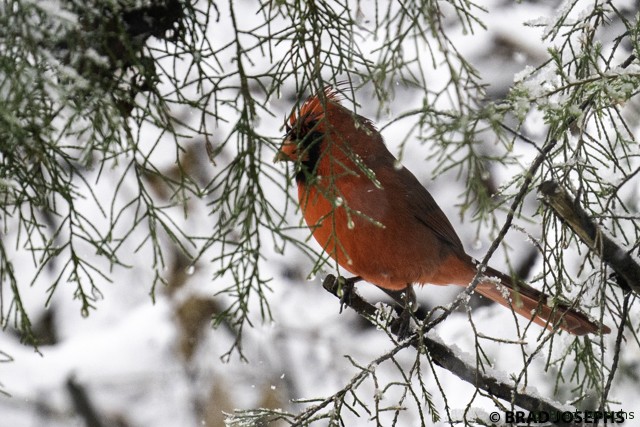
Male cardinal in a snow covered cedar.

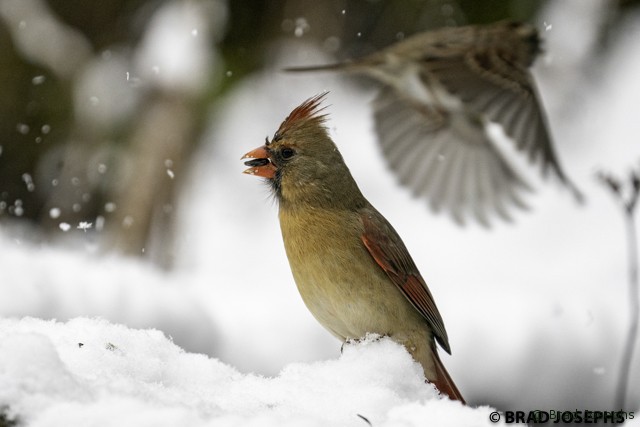
Female cardinal with a white throated sparrow in the background.

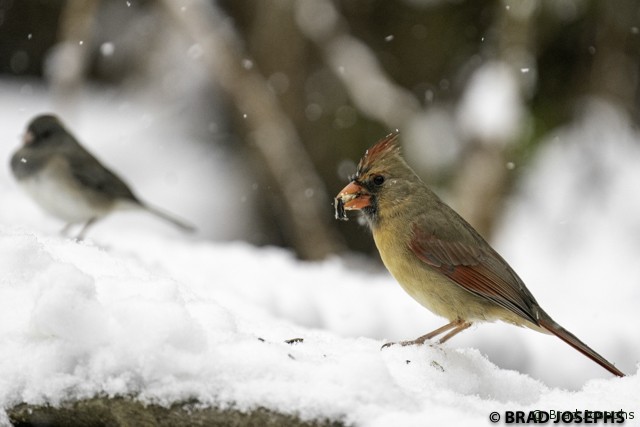
Female cardinal with junco in the background.

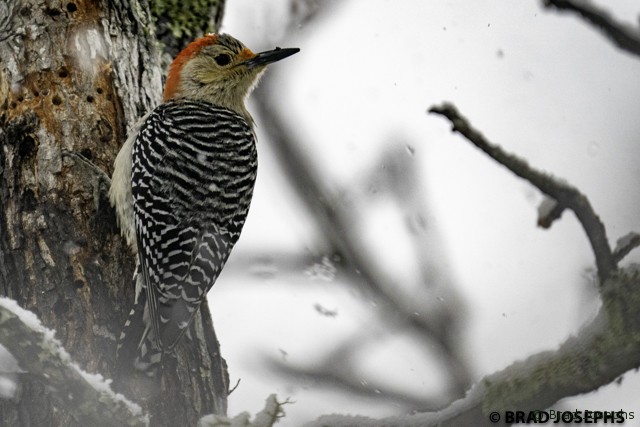
Red-bellied woodpecker. I love to help these birds get through the winter with a suet feeder. They naturally feed on dormant insects in the bark and trunks of trees, especially standing dead. By having healthy populations of woodpeckers nearby, I feel that they help control oak borers and other insects which can kill our beautiful oak trees and other hardwoods.

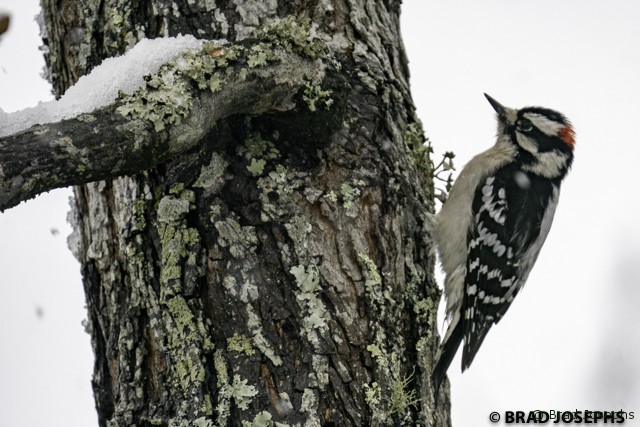
Small but colorful downy woodpecker. They look almost identical to hairy woodpeckers, but notice the very small bill, which is the easiest way to delineate the two species.

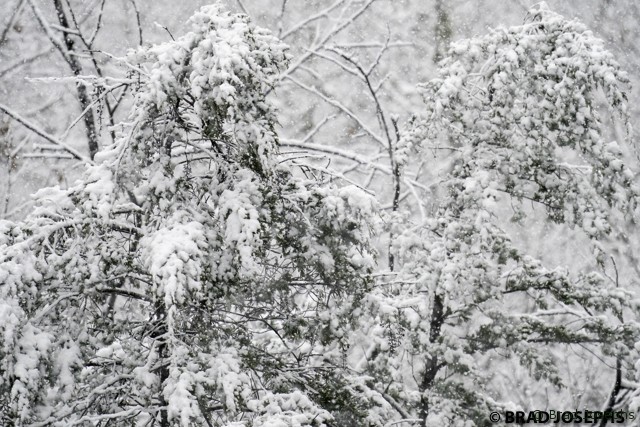
Snow covered cedars.

I could never live in a city unless I easy access to nature. Luckily I found a remote, wild, highly biodiverse forest ecosystem to live in. Wherever you live, you can hopefully find intellectual and spiritual enhancement in your life by appreciating the natural world.


arkansasarkansas birdsbird photographynature writingozarksPhotographywildlife photography
Share Tweet

Brad Josephs

Brad has been a Natural Habitat Expedition Leader since 2005, guiding Alaska grizzly bear tours, Churchill polar bear tours, northern lights expeditions and China panda tours. His specialty is bear biology and ecology of the north country.

You Might Also Like

  • Ozark Journal

    Ozark Journal Update- Game Camera Bobcats and More!

  • Ozark Journal

    Ozark Journal- Spring Magic Birds

  • Guide Stories

    Enhancing Your Backyard Wildlife Habitat Part 2- Native Plants, Trees, Mammals and Birds

No Comments

Leave a reply Cancel reply


Follow Brad on Social Media!

Don’t miss any of Brad’s adventures and wildlife sightings! You can follow him on YouTube, Facebook and more!

Tags

Alaska Alaska Conservation Alaska Photo Tours Alaska Travel Bears Bear Viewing borneo Brad Josephs Brown Bears Churchill Katmai National Park Natural Habitat Adventures Photography Wildlife Watching Trips

Archives

  • Home
  • Nature Photography
  • Wildlife Videos
  • Guide Stories
  • Conservation
  • About

Copyright © 2026 Alaska Bears and Wolves