
This last month guiding two expeditions in Borneo for Natural Habitat Adventures has the most productive of all time, so far. There were so many highlights, such as the incredible viewing of proboscis monkeys that I illustrated in my last post On the last trip, we were so fortunate to have amazing sightings and photo opps with two of the most difficult primates to see in Borneo- the nocturnal Western Tarsier, and the slow loris!
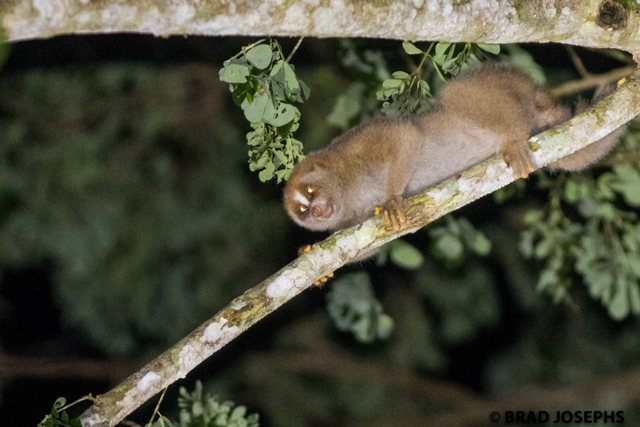
Slow Loris- These guys are the most primitive of the world’s primates and are the only ones which have retained the specialized tapetum lucidum, which is the reflective layer in the eye that allows for nocturnal vision, and creates eye shine from a spotlight. Dogs, cats and other nocturnal animals have this, but the other primates went the diurnal route (active in day) and lost this feature. These guys secrete a toxin from a gland on the upper arm, which, when mixed with saliva causes severe allergic reactions. They cover their offspring in this mixture to protect them from predators! It is thought that these guys obtain toxins from poisonous beetles to make them the one and only venomous primate.
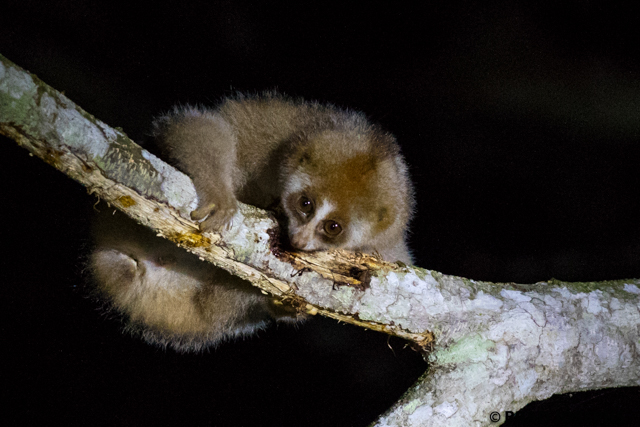
We found this curious loris in a tree at Sepilok. He appeared to be chewing the bark, and licking sap from the branch!
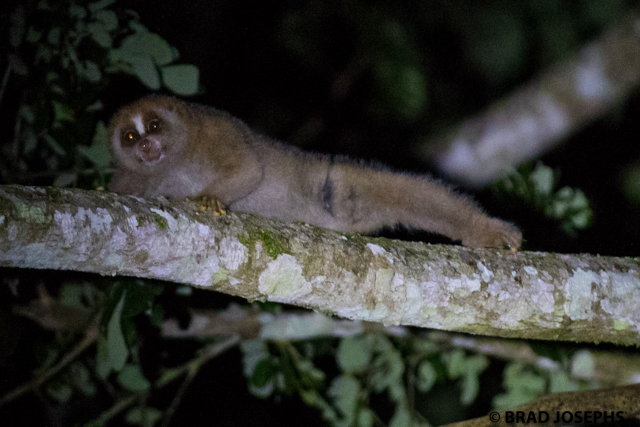
Loris move in slow motion, and grip branches with wide feet, which have opposable toes.
Western Tarsier– Always a favorite among the bizarre animal fans, the tarsier looks like something that could be created only in the imagination of George Lucas. Tarsiers have the largest eyes for their size of any mammals (each eyeball is the size of the brain). Why? Because they are nocturnal but for some reason lack the tapetum lucidum I mentioned above, so they need enormous pupils to gather enough light in the darkness. They don’t produce eye shine, so they are very tough to spot in the wild, and highly skilled local guides locate them by their musky smell, which was described to me by the famous Danum Valley guide Dennysius Aloysius as resembling that of a drowned grasshopper. Sure, I knew exactly what he meant. They are very small, around 6 inches not including the long tail, and go hopping through the branches of the understory looking for lizards, insects.
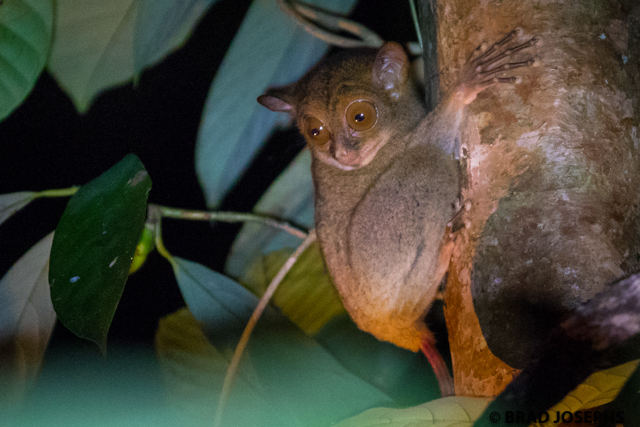
The lack of eye shine makes tarsiers one of the most difficult nocturnal animals in Borneo to locate. Guides can find them by a musky scent.
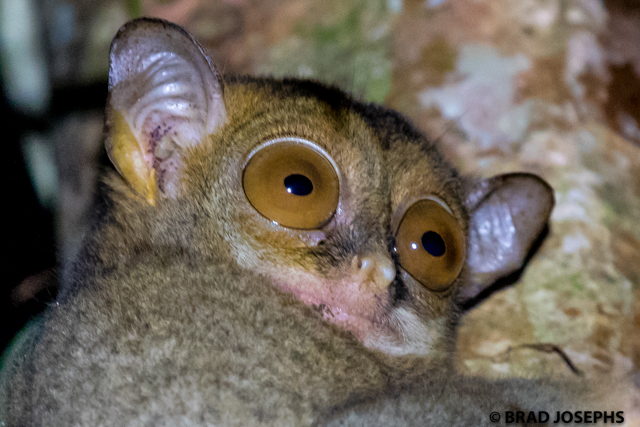
This Danum Valley tarsier gave us an amazing view. These huge eyes allow for nocturnal vision, despite the lack of a tapidum lucidum.
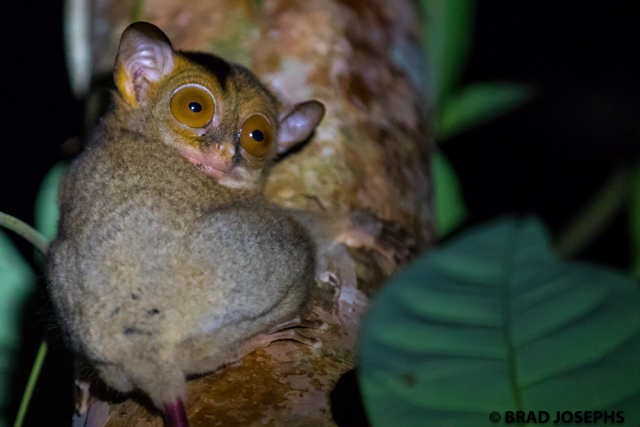
Tarsiers can rotate their heads 180 degrees. This ability can look quite eerie, and native Dayaks believed it was taboo to see a tarsier, as it meant that you were destined to lose your head!
I have lots more stories and images to tell from an amazing month in Borneo! Stay tuned for more, and keep exploring!!!
Brad


1 Comment
Tarsiers are common in the Philippines👌 they are very hard to find, yes but this picture is lit!💋